
This article discusses the fireworks industry’s safety challenges and offers solutions to prevent future accidents and compliance issues.
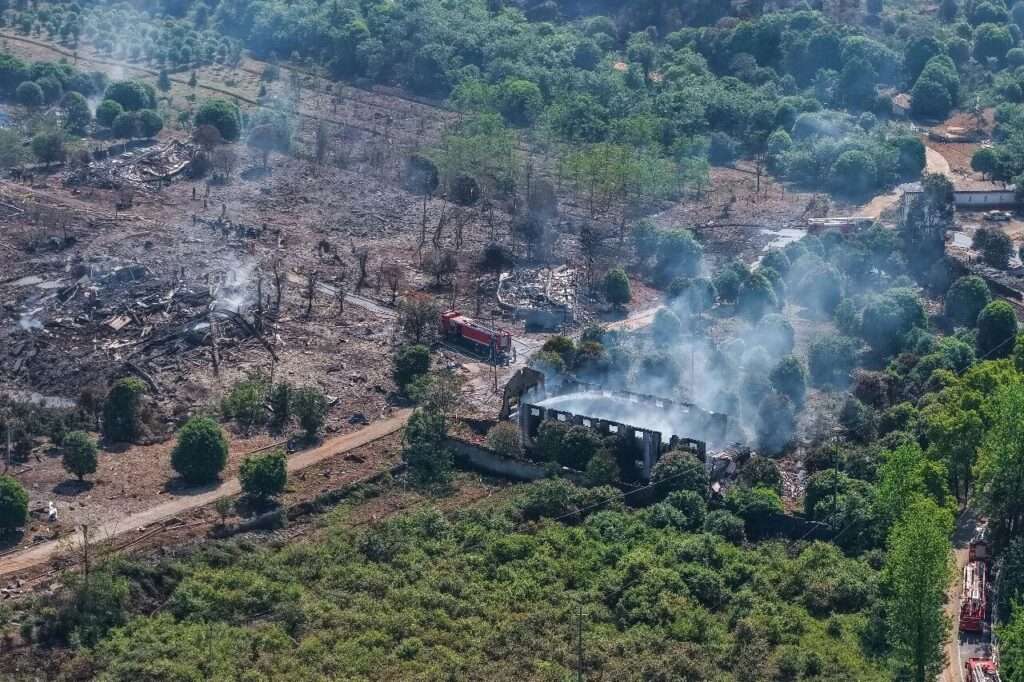
The Liuyang “May 4th” fireworks safety accident served as a wake-up call for the entire fireworks and firecrackers industry, emphasizing the need for comprehensive and end-to-end safety. While firework export companies do not directly engage in factory production, they face flammable and explosive risks at every stage, including sample setting, quality testing, inspection and loading supervision, warehousing and management, domestic transportation, customs declaration and container loading, overseas shipment, and after-sales setting guidance. Negligence in control can easily lead to safety accidents, compliance penalties, business shutdowns, and even restrictions on industry access. Based on the actual business scenarios of export companies, this paper proposes systematic safety control measures from six dimensions: awareness, control of each business link, personnel management, system construction, emergency response, and industry self-discipline:
Recommendations for china fireworks Foreign Trade Company on Full-Process Safety Production Compliance and Risk Prevention
First, establish the correct understanding: Trading companies are not “outsiders,” but are primarily responsible for safety.
- Completely abandon the complacent mentality of “only doing trade, not production; safety is the factory and logistics’ responsibility.” Foreign trade enterprises are the source of orders, product selection, inspection, and logistics organization, and bear responsibility for selecting, supervising, controlling, and holding accountable downstream factories, warehousing, logistics, and the entire fire safety chain.
- Incorporate safety into performance evaluations. Order acceptance, supplier onboarding, order release, and shipment approval are all linked to safety audits. Unsafe orders will not be accepted, non-compliant factories will not be cooperated with, and substandard products will not be shipped.
- Establish a bottom-line mentality for all employees: a single safety incident is sufficient to revoke qualifications, shut down operations, hold legal representatives and responsible persons accountable, and even implicate all upstream and downstream businesses.
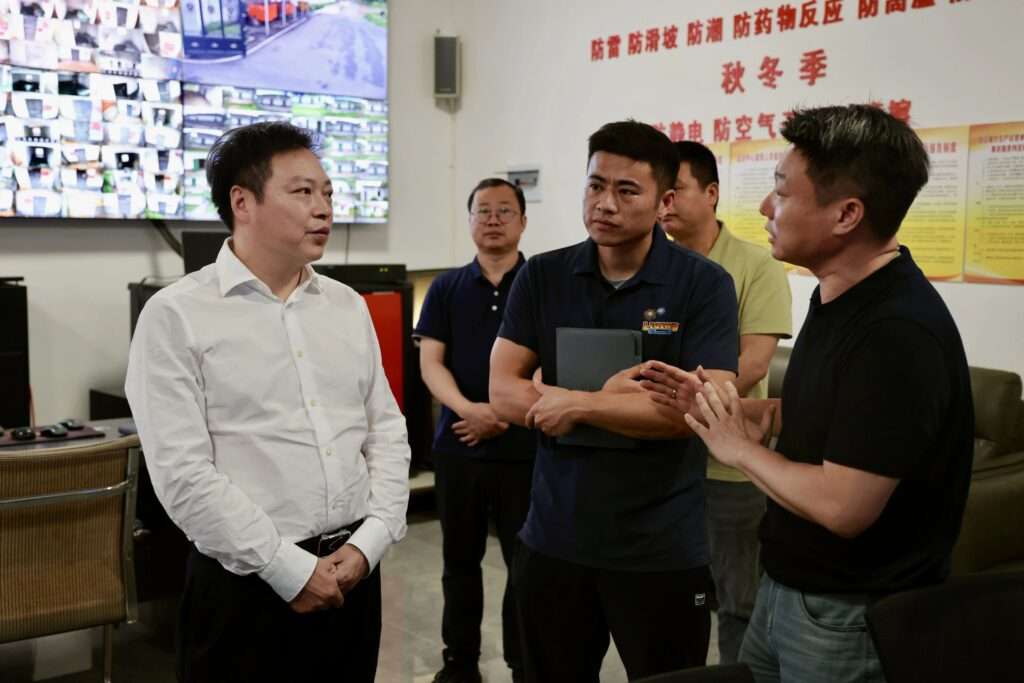
II. Key Safety Operation Points for Each Core Business Process
(I) Sample ignition process (extremely high risk, most prone to accidents)
- Designated Professional Launch Sites: Randomly launching samples in residential areas, office buildings, or ordinary open spaces is strictly prohibited. Designated launch sites must be selected in compliant, open areas, far from residential buildings, gas stations, high-voltage power lines, forests, and flammable/explosive warehouses, with a clearly defined safety perimeter.
- Graded and Categorized Sample Management: Fireworks, combination fireworks, high-altitude fireworks, cold-light fireworks, and small toy fireworks should be tested in designated areas. Large-scale fireworking are strictly prohibited from being tested by a single person. The amount of propellant, specifications, and launch height must be strictly controlled.
- Test Launch Personnel and Procedures:
- Only trained personnel should operate the equipment. Novices and sales personnel are strictly prohibited from igniting or testing the equipment.
- Before testing, check the product packaging, fuse, and cylinder for cracks, leaks, dampness, or mold.
- After ignition, quickly move to a safe distance. Close observation and retrieving unburned or misfired items are strictly prohibited.
- Unexploded or dud fireworks must not be disassembled, struck, or soaked in water. They should be disposed of professionally according to regulations.
- Sample storage: Samples should be stored separately in a dedicated cabinet before and after the trial run. They should not be stored with office supplies, cardboard boxes, alcohol, or other flammable materials. The quantity of samples should be limited and the cabinet should be locked and managed by designated personnel.
(II) Quality Inspection and Factory Inspection
- Supplier Entry Safety Priority: We only cooperate with fireworks factories that possess valid production licenses, meet safety production standardization requirements, and have compliant factory layouts. We resolutely reject small workshops, unlicensed factories, and manufacturers exceeding their permitted production scope, cutting off substandard and non-compliant products at the source.
- Safety Standards for On-site Inspection:
- Strictly adhere to factory safety regulations when entering the production area. Do not wander through production lines, touch the chemical processing area, smoke, or carry any source of ignition.
- Inspections are conducted only in the finished product warehouse and compliant inspection areas. Do not linger in hazardous workshops such as those for loading, building, or assembly.
- Focus on inspecting for safety hazards such as excessive chemical dosage, insufficient tube wall thickness, non-compliant fuse length, improper sealing, leakage, and unauthorized modifications to specifications. Entire containers with safety defects will be rejected. We will not accommodate factory personnel.
- Compliant Third-Party Testing: For products involving export inspection and overseas certification, we entrust qualified fireworks testing institutions. We do not use unqualified private testing agencies, do not tamper with test reports, and do not conceal product grades.
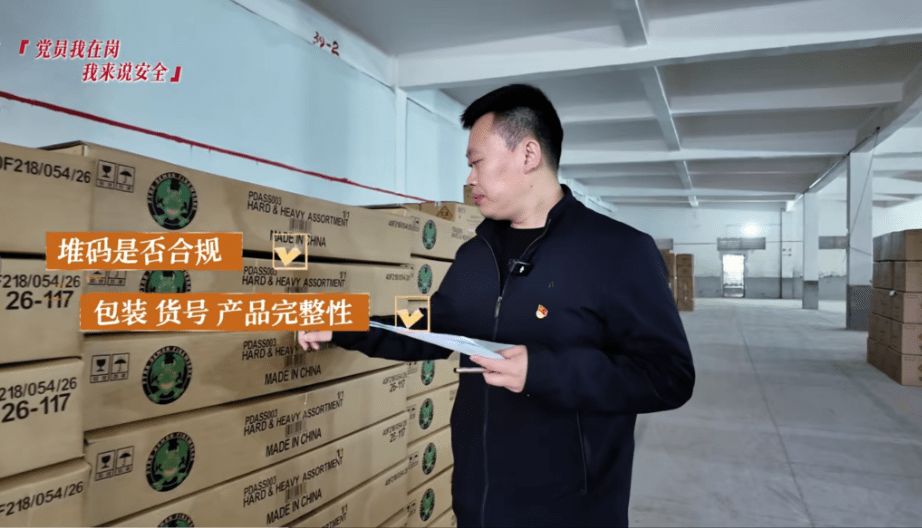
(III) Warehousing consignment and temporary stock storage
- Warehouse Location and Qualifications: Rented warehouses must possess specialized fireworks storage qualifications. Storing fireworks in ordinary residential buildings, garages, basements, and high-rise warehouses is strictly prohibited. Warehouses must be located away from densely populated areas, fire sources, heat sources, and power sources.
- Daily Warehouse Management:
- Zoning: Class A, B, C, and D fireworks must be separated, with sufficient fire escape routes, stack spacing, and wall clearance.
- Strict Fire Source Control: Smoking and open flames are strictly prohibited in and around the warehouse. Electrical wiring must be modified to explosion-proof standards. Open flames, electric stoves, and charging stations are prohibited.
- Temperature and Humidity Control: Protect against moisture and high temperatures/sunlight. Ensure adequate ventilation and cooling during hot summer periods.
- Inbound and Outbound Records: Ensure accurate inventory records. Overstocking and mixing with other hazardous materials are strictly prohibited.
- Duty Roster and Patrols: A 24-hour duty roster will be maintained. Daily patrols will be conducted to check for damage, leakage, tilted stacks, aging wiring, and unauthorized entry.
(iv) Domestic transportation and land transport loading supervision
- Compliant Logistics and Transportation: Only fleets, vehicles, and licensed drivers and escorts with the necessary qualifications for transporting fireworks and firecrackers (dangerous goods) will be entrusted. Ordinary trucks and unlicensed vehicles will not be used.
- Loading Site Safety:
- Supervisors are strictly prohibited from smoking or using open flames or mobile phones.
- Handle fireworks boxes with care; throwing, stepping on, or pressing on them is strictly prohibited to prevent damage and friction that could cause hazards to the chemicals.
- Loading and stacking must be secure, ensuring no exceed height or width limits, and proper protection against rain, sun, and impacts.
- Mixing ordinary goods and flammable/explosive chemicals in the same vehicle is strictly prohibited.
- Transportation Routes and Timeliness: Avoid busy urban areas, schools, hospitals, and peak holiday traffic. Strictly control illegal parking and unloading at night.
(v) Customs declaration, port container loading and export process
- Accurately declare the product grade, category, and quantity; do not underreport specifications, conceal hazard levels, or conceal prohibited products to avoid safety and compliance risks caused by port inspections, container detentions, or delays.
- Comply with port regulations for dangerous goods management during container loading and unloading at the port yard; do not store illegally or exceed permitted time limits; cooperate with port security inspections.
- Ensure proper affixing of hazard labels and completeness of dangerous goods documentation; simultaneously inform overseas customers of safety precautions for the storage and transportation of fireworks.
(vi) Business reception and customer sample viewing process
When foreign clients or domestic merchants come to the company to view samples or watch the fireworks display, a safety briefing must be conducted in advance, a safe viewing area must be designated, and a dedicated person must accompany them throughout the process. Clients are prohibited from touching, disassembling, or igniting the samples without authorization, and accidents caused by unauthorized operations by outsiders must be prevented.
III. Personnel Safety Management: Comprehensive training and certification for all employees.
- Organize all sales, order processing, inspection, warehousing, and driver liaison personnel to regularly participate in fireworks and firecrackers safety training, learning about the characteristics of hazardous materials, fire prevention and explosion protection, emergency response, and handling of misfires.
- Key positions: Inspectors, sample set-off personnel, and warehouse managers will be assigned to specific roles and will undergo pre-job assessments; those who fail will not be allowed to work.
- Strictly enforce a no-smoking policy: Smoking is prohibited in all areas including the office area, sample room, warehouse, setting-off area, and inspection site; this is a red-line management system.
- Participation in high-risk operations such as inspection, trial setting, loading supervision, and warehouse inspections under the influence of alcohol is strictly prohibited.
IV. System and Hardware Safety Net: Turning Safety into Process
- Establish five major systems: Supplier safety access system, sample release management system, warehouse entry and exit system, safe operation procedures for inspection, and safety hazard investigation and rectification system.
- Equip with basic safety hardware: dry powder fire extinguishers, fire sand, fire blankets, warning tape, explosion-proof lighting, no-smoking signs, and safety warning slogans, covering the sample room, warehouse, and release area.
- Regularly conduct daily hazard inspections: weekly self-inspections and monthly reviews, checking sample storage, warehouse wiring, partner factories, and logistics vehicles one by one. Any hazards discovered will result in immediate work stoppage, order suspension, and rectification.
V. Emergency Response: Stay Calm and Practice Scientific Risk Avoidance
- Formulate specialized emergency response plans for fires, injuries caused by pyrotechnic discharge, smoke emissions in storage facilities, and sudden hazards during transport; ensure that all personnel are thoroughly familiar with evacuation routes and firefighting procedures.
- In the event of a dud, smoke emission, or fire, immediately evacuate personnel and establish a safety perimeter; strictly avoid blind attempts to extinguish the incident or approaching the scene to observe, and promptly notify the police as well as the relevant industry regulatory authorities.
- Establish an accident log to record and conduct a post-mortem analysis of every minor hazard or regulatory infraction, thereby preventing the recurrence of similar issues.
Premium Silvester-Feuerwerk kaufen: Warum Sunsong? Erstklassige Qualität direkt vom Hersteller
- Proactively align with the latest regulatory requirements issued by emergency management authorities, public security bureaus, customs agencies, and fireworks industry associations; stay abreast of post-incident industry rectification policies; ensure proactive compliance; and conduct preemptive self-inspections and corrective actions.
- Refuse to accept orders for fireworks that exceed prescribed specifications or explosive content limits, or involve unauthorized modifications; refrain from inducing factories to engage in non-compliant production; uphold the fundamental safety baseline at the trading level; and strictly avoid profiting from high-risk ventures or accepting orders that cross regulatory “red lines.”
- Exchange safety management expertise with industry peers, share resources regarding compliant manufacturing facilities and logistics/warehousing providers, and collectively safeguard the safety ecosystem of the entire industry.
Summary: Although a fireworks trading company may not appear to be directly involved in manufacturing, every stage—from factory and product selection to inspection, sampling, warehousing, logistics, and actual firing—constitutes a critical safety point; in the event of an accident, there are no bystanders. By fostering a company-wide safety consciousness, strictly implementing operational protocols across all stages, ensuring comprehensive personnel training, establishing robust institutional safeguards, and rigorously controlling suppliers at the source, it is possible to minimize safety accidents as well as compliance and operational risks to the greatest extent possible.